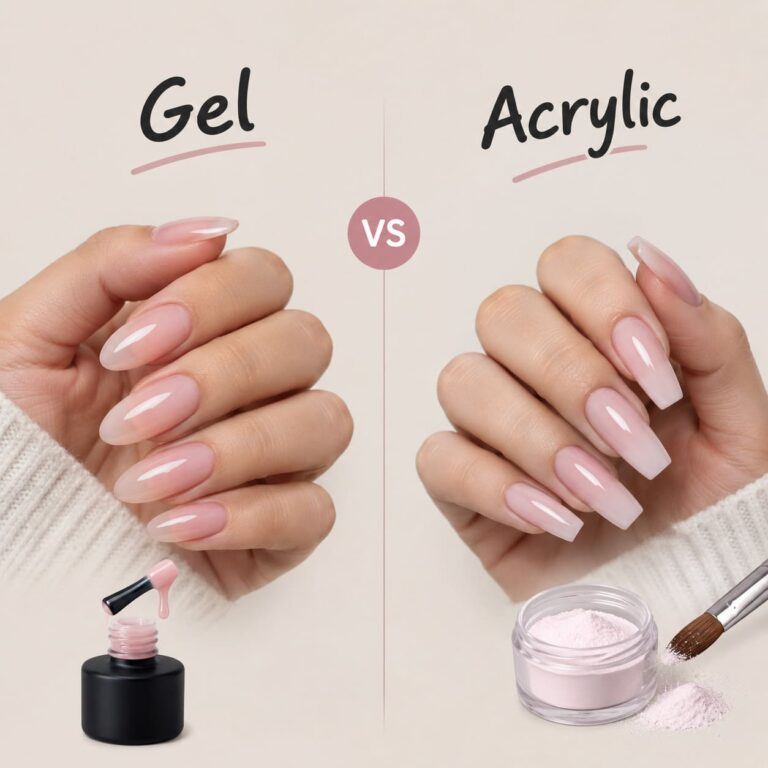
Choosing between gel and acrylic can feel surprisingly complicated when both can give you polished, durable nails. Gel vs acrylic nails mainly comes down to how the material is applied, how flexible or rigid it feels, the length you want, and how you use your hands. Gel tends to offer a lighter, glossy finish, while acrylic provides a firmer structure for longer extensions. Here’s how they compare on wear, appearance, maintenance, removal, and nail health.
Gel vs Acrylic Nails at a Glance
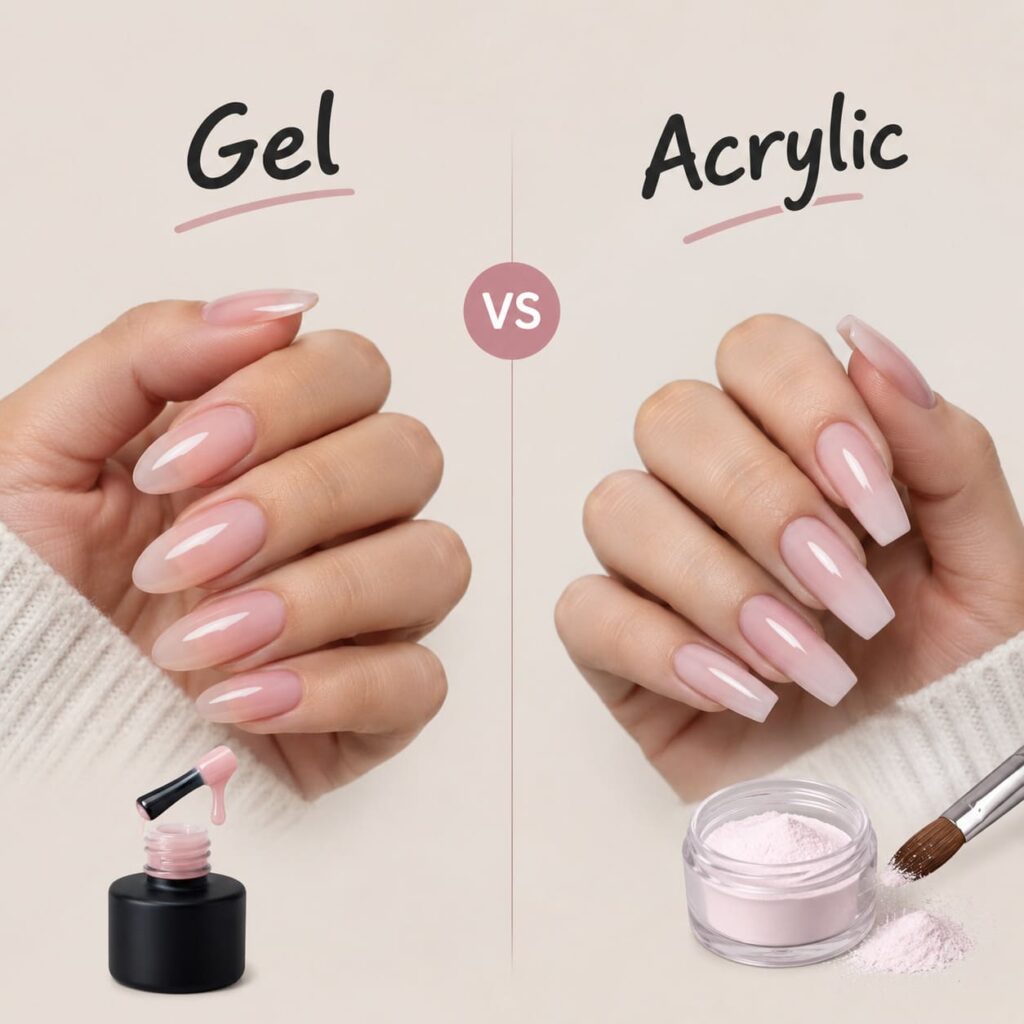
If you’re deciding between the two before your next appointment, start with this quick comparison:
| Feature | Gel Nails | Acrylic Nails |
| Feel | Flexible and lightweight | Firm and rigid |
| Appearance | Glossy and natural-looking | Structured and sculpted |
| Best for | Short to medium lengths | Medium to long extensions |
| Adds length | Some gel systems can | Yes |
| Curing | UV/LED lamp | Air-cures through a chemical reaction |
| Flexibility | Higher | Lower |
| Strength | Strong with some flexibility | Very rigid and structured |
| Maintenance | Usually around 2–3 weeks | Usually a fill around 2–3 weeks |
| Removal | Often soak-off, depending on system | Usually more involved; filing and/or soaking |
| Best match | Natural-looking, lightweight styles | Long, structured or dramatic styles |
What Are Gel Nails?
Gel nails use a gel-based product that is applied to the nail and cured under a UV or LED lamp. Depending on the service, gel can be used as polish on natural nails, an overlay, or as an extension system.
A gel manicure on natural nails gives you a smooth, high-shine finish without the rigid feel of traditional acrylic. Gel extensions can also add length while maintaining a relatively lightweight appearance.
One important detail: “gel nails” can describe several different systems. Gel polish, builder gel, hard gel, and Gel X-style extensions are not identical products or applications.
For that reason, ask your technician exactly which gel system you’re getting rather than assuming every gel service works the same way.
What Are Acrylic Nails?
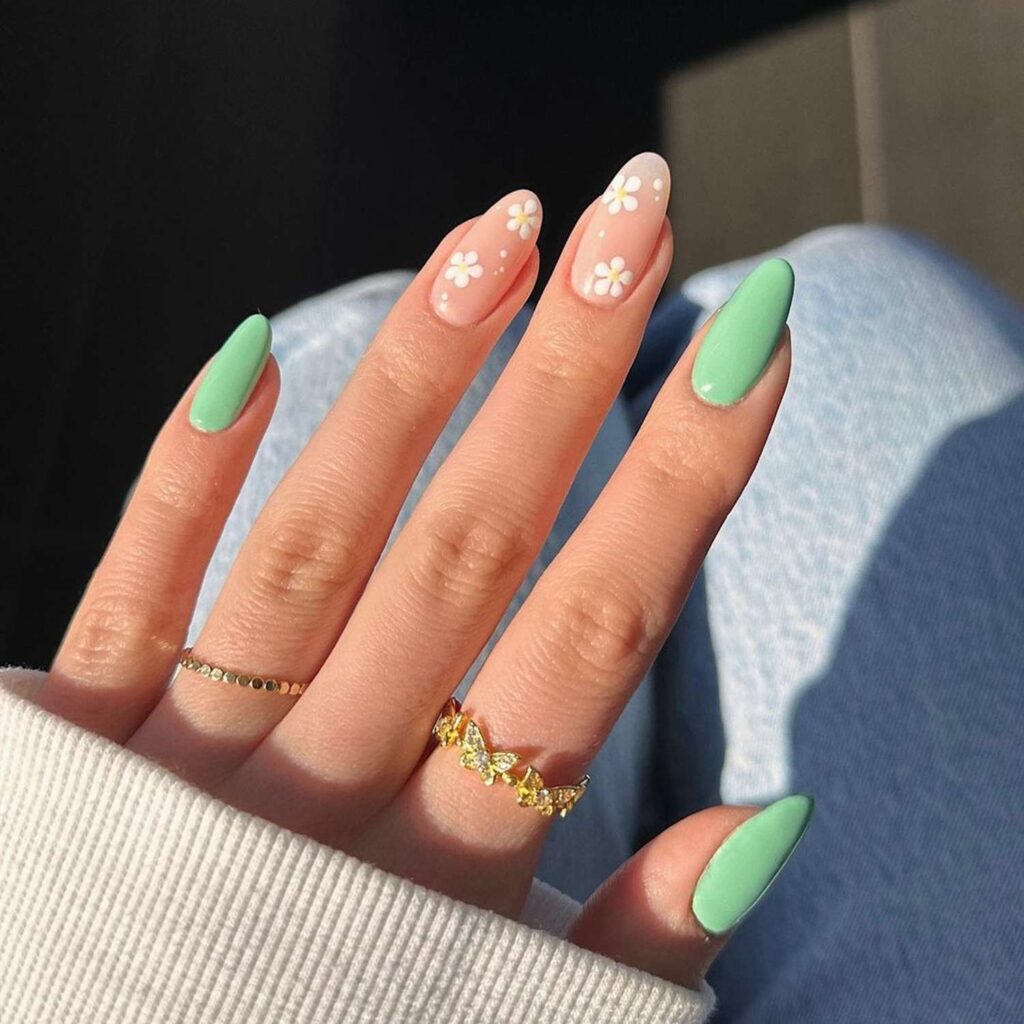
Acrylic nails are created by combining a liquid monomer with a polymer powder. The technician shapes the mixture over the natural nail or an extension before it hardens.
Once set, acrylic forms a firm structure that can be shaped into different lengths and silhouettes. This makes it especially useful when you want significant length or a more sculpted nail shape.
Acrylic is also highly customizable. Your technician can build the structure to suit shapes such as almond, coffin, square, or stiletto.
Because acrylic is rigid, it feels different from gel. Some people like that solid, substantial feeling, while others prefer the lighter flexibility of gel.
Gel vs Acrylic: Which One Looks More Natural?
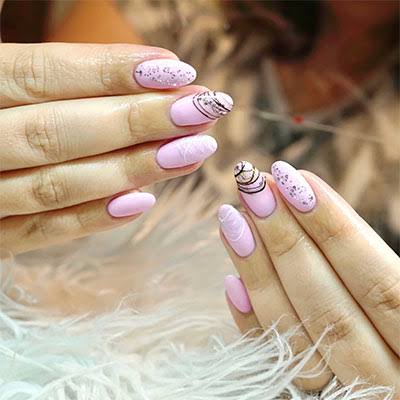
Gel usually has the edge if your priority is a lightweight, glossy, natural-looking finish. Acrylic can also look very refined, but its structure tends to feel more substantial, especially at longer lengths.
Gel is a good fit if you want your nails to look polished without feeling heavily enhanced. The smooth surface and natural-looking shine work particularly well with sheer pinks, nudes, French tips, and minimalist nail art.
Acrylic gives you more structural control when you want dramatic length or a strongly defined shape. A skilled technician can still file acrylic relatively thin and create an elegant finish.
So don’t judge the two systems only by photographs. Length, thickness, shape, and application technique can change the final appearance just as much as the product itself.

Which Lasts Longer: Gel or Acrylic?
Both gel and acrylic can provide several weeks of wear when applied and maintained correctly. In practice, many clients return for maintenance around every two to three weeks, although the timing depends on nail growth, lifestyle, application quality, and the specific system used.
Acrylic’s rigid structure can make it particularly useful for long extensions and clients who need more structural support. Gel’s flexibility can make it comfortable for shorter or medium lengths.
That means there isn’t a simple rule that acrylic always lasts longer.
If your manicure starts lifting, cracking, or separating, don’t wait for a predetermined appointment date. Those signs are a reason to have the product checked or removed properly.
Gel vs Acrylic for Nail Strength and Length
If you want significant length, acrylic is often the more suitable system because it creates a rigid structure that can support longer extensions.
Gel can also create extensions, particularly with systems designed specifically for that purpose. However, the right choice depends on the gel system, desired length, nail shape, and how much stress your nails experience.
Think about your everyday routine:
- Short to medium nails: Gel can provide durable polish with a lighter feel.
- Medium-length extensions: Either system may work depending on your preferred finish and structure.
- Long extensions: Acrylic can provide the rigid structure many clients prefer.
- Frequent hands-on activity: Your technician may recommend a shorter length regardless of the system.
- Minimalist look: Gel works well for thin, glossy, natural-looking finishes.
Your technician should also evaluate your natural nails before deciding how much length or product is appropriate.
Gel vs Acrylic: Which Should You Choose?
The easiest way to decide is to start with your lifestyle rather than the trend you’re seeing online.
Choose gel if you want:
- A lightweight, flexible feel
- A glossy, natural-looking finish
- Short to medium-length nails
- A polished everyday manicure
- A softer-looking finish for minimalist nail art
Gel is particularly appealing when you want your manicure to look refined without adding a lot of visual or physical bulk.
Choose acrylic if you want:
- Significant added length
- A firm, structured feel
- Dramatic shapes
- More substantial extensions
- A strong foundation for certain long nail-art designs
Acrylic can be a practical choice when length and structure matter more than having the lightest possible enhancement.
Not sure which one fits?
Bring your technician three pieces of information:
Your desired length + your daily routine + the look you want.
For example, saying “I type all day, want medium almond nails, and prefer a natural finish” gives your technician much more useful information than simply saying “I want gel.”
What to Ask Your Nail Technician Before Choosing
A few questions can make your appointment much easier:
- Is my natural nail strong enough for the length I want?
- Which system would work better for my daily routine?
- Will this product soak off or need to be filed?
- How often will I need maintenance?
- How much length can I realistically wear without frequent breaks?
- What should I do if the product starts lifting?
- Can we keep the enhancement thinner for a more natural look?
A good technician should be able to explain why a particular system suits your nails instead of simply applying the same service to everyone.
Gel vs Acrylic Nails: The Bottom Line
Gel and acrylic are both useful nail systems, but they solve different problems. Gel is generally a good match for a lightweight, flexible and glossy finish, while acrylic is particularly useful when you want substantial length and a firm, structured enhancement.
Your natural nail condition, desired length, daily routine, and preferred appearance should guide the decision. And whichever option you choose, careful preparation and removal are just as important as the product itself.
If you’re still deciding, a professional consultation can help you choose a service that fits both your style and your natural nails.
FAQ: Gel vs Acrylic Nails
Are gel nails better than acrylic nails?
Neither is universally better. Gel generally offers a lighter, more flexible feel, while acrylic provides a firmer structure that can work well for longer extensions.
Which lasts longer, gel or acrylic?
Both commonly require maintenance around every two to three weeks, although actual wear varies with nail growth, lifestyle, application, and the specific product system.
Are gel nails less damaging than acrylic?
Gel is not automatically damage-free. The American Academy of Dermatology notes that both artificial nails and gel manicures can contribute to nail problems, particularly with aggressive preparation, repeated use, or improper removal.
Which is better for long nails, gel or acrylic?
Acrylic is commonly used when you want substantial length because its rigid structure provides strong support. Certain gel extension systems can also create length, so your desired shape and the specific product should be discussed with your technician.
Can gel and acrylic nails look natural?
Yes. Both can look natural when the length, thickness, shape, and application are appropriate. Gel often has a naturally glossy and lightweight appearance, while acrylic can be filed into a thinner, more refined shape.
How often should I get gel or acrylic nails done?
Many clients schedule maintenance around every two to three weeks, but there is no universal schedule. Nail growth, lifting, cracking, daily hand use, and the condition of your natural nails should determine when you return.
Ready for Your Next Manicure in San Francisco?
If you’re comparing gel, acrylic, or another nail enhancement, SF House of Nails offers professional nail services across San Francisco. You can choose from locations on Polk Street in Russian Hill, Fillmore Street in Pacific Heights, and Pierce Street near Cow Hollow. The salon currently lists gel manicure, Gel X, builder gel, dip powder, and acrylic services.
For a service that fits your nail length, routine, and preferred finish, discuss your goals with your technician before the appointment.